Showing posts with label Church. Show all posts

Nămăeşti Monastery

Nămăeşti Monastery is situated in a picturesque area, an area with ancient historical traces, very close to Campulung Muscel city, at an altitude of almost 760 meters, in Nămăeşti village, Arges county.

The church of the Namaiesti monastery is buil in the rock in the mountain rock. Historical documents about the village of Namaiesti and the monastery of Namaiesti mark the years 1503-1547 in the rulers of the rulers Radu the Great and Mircea Ciobanul.

The church of the monastery is considered a historic monument from the 14th century.
Exact dates regarding the founding of the monastery and the church dug in stone are not known.
However, the legends delivered orally, from the ancestors, in the village of Namaiesti, even mention the name of the prince Negru Voda.

All the tradition tells us about the anonymous founder of the church: It is said that a shepherd crows the sheep by the side of the place. Going to the rock where the church was then digged, the shepherd stopped at the foot of the mountain, at the edge of the forest, on this large stone, remaining with the sheep here overnight. The shepherd appeared to him in the dream of the Mother of God who said to her, “Get up, dig under you and find an icon in a stone church.”

Nămăeşti Monastery,   Church, Orthodox, Romania, Arges

Nămăeşti Monastery, Namaiesti, Church, Orthodox, Romania, Arges,

Nămăeşti Monastery, Namaiesti, Church, Orthodox, Romania, Arges,

Nămăeşti Monastery, Namaiesti, Church, Orthodox, Romania, Arges,

Nămăeşti Monastery, Namaiesti, Church, Orthodox, Romania, Arges,

Nămăeşti Monastery, Namaiesti, Church, Orthodox, Romania, Arges,


Aninoasa Monastery


Aninoasa Monastery is an orthodox church located in Arges county, in Aninoasa. It is 16 km faraway from Campulung and 30 km faraway from Curtea de Arges.

Aninoasa, Manastirea Aninoasa, Church, Landscapes, Orthodox, Romania,

Aninoasa monastery dates from the XVII-th century, 1677, and was built in brâncovenesc style, by a nobleman from around, Tudoran Vladescu. As a historical and architectural monument, the monastery still preserves the old cyrillic writing in the belfry and on crosses. In the past, the monastery was surrounded by larger areas of alder or alder trees, a taller and straighter species, specific to wetlands. Hence derives the name of the monastery Aninoasa, from ”anin”, meaning alder tree. 
Aninoasa Monastery, Aninoasa, Manastirea Aninoasa, Church, Landscapes, Orthodox, Romania,

Aninoasa Monastery, Aninoasa, Manastirea Aninoasa, Church, Landscapes, Orthodox, Romania,

Aninoasa Monastery, Aninoasa, Manastirea Aninoasa, Church, Landscapes, Orthodox, Romania,

Aninoasa Monastery, Aninoasa, Manastirea Aninoasa, Church, Landscapes, Orthodox, Romania,

Aninoasa Monastery, Aninoasa, Manastirea Aninoasa, Church, Landscapes, Orthodox, Romania,

Aninoasa Monastery, Aninoasa, Manastirea Aninoasa, Church, Landscapes, Orthodox, Romania,

Aninoasa Monastery, Aninoasa, Manastirea Aninoasa, Church, Landscapes, Orthodox, Romania,

Aninoasa Monastery, Aninoasa, Manastirea Aninoasa, Church, Landscapes, Orthodox, Romania,

Aninoasa Monastery, Aninoasa, Manastirea Aninoasa, Church, Landscapes, Orthodox, Romania,

Aninoasa Monastery, Aninoasa, Manastirea Aninoasa, Church, Landscapes, Orthodox, Romania,

Aninoasa Monastery, Aninoasa, Manastirea Aninoasa, Church, Landscapes, Orthodox, Romania,

Aninoasa Monastery, Aninoasa, Manastirea Aninoasa, Church, Landscapes, Orthodox, Romania,

Aninoasa Monastery, Aninoasa, Manastirea Aninoasa, Church, Landscapes, Orthodox, Romania,


Bisericani Monastery

The monastery is located on Mount Pietrosu, at 650 m altitude, 12 km from Piatra Neamt. Access is by car on DN15, Piatra Neamt – Bicaz. Starting from Piatra Neamt, after about 7 km, on the right, way, up, (5 km) is paved, has many switchbacks and leave the traveler`s eyes to admire the exquisite beauty of Bistrita Valley.

Bisericani Monastery, founded by Bogdan Voda III, Prince of Moldavia (1504 – 1517) was built between 1508 -1512 on the foundation of a wooden church, dedicated to the Annunciation, built by the hermit Joseph and his disciples came from the Jordan desert. The wooden Church of Joseph (hermitage Bisericani) was burned and plundered in 1498 by the Tatars. After burning the church, Joseph and his disciples have decided to go to Mount Athos, but the departure to Athos was stop by a miraculous event by the appearing of Holy Mother of God, in an oak. In the reign of Stefanita Voda (1517-1527), grandson of Stephen the Great,  the monks at Bisericani succeedes, with its help, to raise a more enduring sanctuary of stone. . The monastery church has the footprint of changes made ​​by Petru Rares (1527 – 1538 and 1541 -1546) in the year 1535. The flowering that hermitage had reached in the eighteenth century, did it to become a convent. After Cuza’s land reform in 1864, the monastery enters a decline decreasing the number of its inhabitants. In 1885, King Charles I (1866- 1914) transforms it into a prison.

Bisericani Monastery, Church, Moldova, Neamt County, Orthodox, Bisericani,

Bisericani Monastery, Church, Moldova, Neamt County, Orthodox, Bisericani,

Bisericani Monastery, Church, Moldova, Neamt County, Orthodox, Bisericani,

Bisericani Monastery, Church, Moldova, Neamt County, Orthodox, Bisericani,

Bisericani Monastery, Church, Moldova, Neamt County, Orthodox, Bisericani,

Bisericani Monastery, Church, Moldova, Neamt County, Orthodox, Bisericani,

Bisericani Monastery, Church, Moldova, Neamt County, Orthodox, Bisericani,

Bisericani Monastery, Church, Moldova, Neamt County, Orthodox, Bisericani,

Bisericani Monastery, Church, Moldova, Neamt County, Orthodox, Bisericani,

Dragomirna Monastery


Placed among the beautiful hills of Bucovina, at 12 km West from the old residence of Steven the Great and the Bishops of Moldavia, the Dragomirna monastery stands tall defying time, inside the fortress walls. 
Built as to face the heights, in a search for light from among the forest, shadowed by a curtain of fir trees and majestically reflected by the lake nearby, this place of prayer, through its ancientness, through the originality of its style, through the its elegant and solid shape, through the picturesque awakens the admiration of each visitor, so that in its presence the pilgrim is as impressed as is the historian or the art critic.

Besides the beauty of the landscape, the unusual location, what leaves an unforgettable impression is the peculiar elegance of the monument, withholding geometrical rigors of great taste, an unique stature through its proportions and lengths, exceeding all of the other Moldavian medieval monuments.

Bucovina, Church, Dragomirna Monastery, Moldova, Monastery, Orthodox, Romania, Suceava,

Bucovina, Church, Dragomirna Monastery, Moldova, Monastery, Orthodox, Romania, Suceava,

Bucovina, Church, Dragomirna Monastery, Moldova, Monastery, Orthodox, Romania, Suceava,

Bucovina, Church, Dragomirna Monastery, Moldova, Monastery, Orthodox, Romania, Suceava,

Bucovina, Church, Dragomirna Monastery, Moldova, Monastery, Orthodox, Romania, Suceava,

Bucovina, Church, Dragomirna Monastery, Moldova, Monastery, Orthodox, Romania, Suceava,

Bucovina, Church, Dragomirna Monastery, Moldova, Monastery, Orthodox, Romania, Suceava,

Bucovina, Church, Dragomirna Monastery, Moldova, Monastery, Orthodox, Romania, Suceava,

Bucovina, Church, Dragomirna Monastery, Moldova, Monastery, Orthodox, Romania, Suceava,

Bucovina, Church, Dragomirna Monastery, Moldova, Monastery, Orthodox, Romania, Suceava,

Bucovina, Church, Dragomirna Monastery, Moldova, Monastery, Orthodox, Romania, Suceava,


Voronet Monastery


The Voronet Monastery is the most famous buildings of Stephan The Great, a monument included on the list of UNESCO’s world heritage. Its frescoes speak of subtle esoteric knowledge held by medieval theologians of Moldavia and also of the skills of anonymous painters.

Often known as the "Sistine Chapel of the East", the frescoes at Voronet feature an intense shade of blue known in Romania as "Voronet blue."
The monastery is located to the south of Gura Humorului in Suceava County, in the valley of the Voronet River. The legend of the origin of the church unites two men central to Romanian history: the founder of the monastery, Stephen the Great, and Saint Daniil the Hermit, the first abbot of the monastery. The tomb of Saint Daniil is located within the monastery.

The church is one of the Painted churches of Moldavia listed in UNESCO's list of World Heritage sites.
 Voronet Monastery, Bucovina, Church, Daniel the Hermit, Gura Humorului, Landscapes, Moldova, Orthodox, Sf. Daniil Sihastru, Suceava, Romania,

Voronet Monastery, Bucovina, Church, Daniel the Hermit, Gura Humorului, Landscapes, Moldova, Orthodox, Sf. Daniil Sihastru, Suceava, Romania,

Voronet, Bucovina, Church, Daniel the Hermit, Gura Humorului, Landscapes, Moldova, Orthodox, Sf. Daniil Sihastru, Suceava, Romania,
  
Voronet, Bucovina, Church, Daniel the Hermit, Gura Humorului, Landscapes, Moldova, Orthodox, Sf. Daniil Sihastru, Suceava, Romania,

Voronet, Bucovina, Church, Daniel the Hermit, Gura Humorului, Landscapes, Moldova, Orthodox, Sf. Daniil Sihastru, Suceava, Romania,

Voronet Monastery, Bucovina, Church, Daniel the Hermit, Gura Humorului, Landscapes, Moldova, Orthodox, Sf. Daniil Sihastru, Suceava, Romania,

Voronet, Bucovina, Church, Daniel the Hermit, Gura Humorului, Landscapes, Moldova, Orthodox, Sf. Daniil Sihastru, Suceava, Romania,


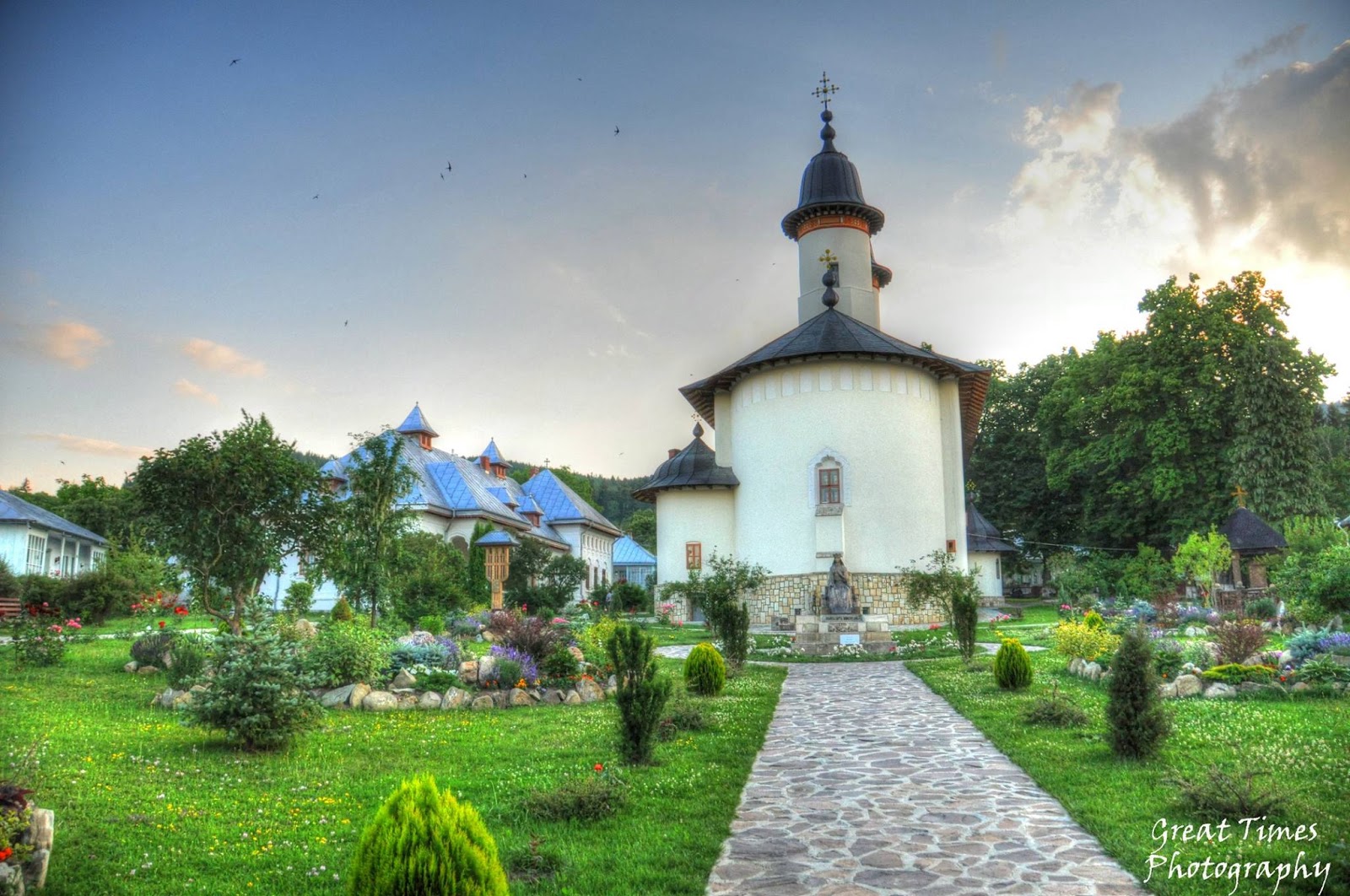
Varatec Monastery


Varatec, Monastery, Church, Landscapes, Moldova, Neamt County, Orthodox, Veronica Micle, Mihai Eminescu, Romania

Varatec monastery is located in Agapia commune, at 12 km to Targu Neamt and 40 km to Piatra Neamt in a small valley at the foot of Stanisoara mountain , at an altitude of 460 m.

Mother Olimpiada was a nun from the former Topolita Hermitage and between 1781 and 1785 settles in this place and creates the foundation for a monastic settlement in the plane called Varatec.
The construction was finished in the year 1812. In the year 1821 Varatec Monastery was plundered and the nuns killed. Mother Olimpiada hardly make it alive and retreat at the Secu Monastery.

The church combines elements of the old Moldavian style of the 15th and 16th centuries with foreign influences of the end of the 18th and the beginning of the 19th century. The church is rectangular, with a single apse at the east end. The two lateral apses of the naos are carved out of the thickness of the wall, and do not show on the exterior.

The grave of poetess Veronica Micle, Mihai Eminescu’s great love, lies within the monastery walls. She committed suicide on August 1889, two months after Eminescu’s death. The monastery has a museum that hosts many valuable religious objects and books mostly made by the nuns. Apart from museum, Varatec has studios for carpet waving, embrodery and icon painting.

Varatec, Monastery, Church, Landscapes, Moldova, Neamt County, Orthodox, Veronica Micle, Mihai Eminescu, Romania

Varatec Monastery, Monastery, Church, Landscapes, Moldova, Neamt County, Orthodox, Veronica Micle, Mihai Eminescu, Romania

Varatec, Monastery, Church, Landscapes, Moldova, Neamt County, Orthodox, Veronica Micle, Mihai Eminescu, Romania

Varatec Monastery, Monastery, Church, Landscapes, Moldova, Neamt County, Orthodox, Veronica Micle, Mihai Eminescu, Romania

Varatec Monastery, Monastery, Church, Landscapes, Moldova, Neamt County, Orthodox, Veronica Micle, Mihai Eminescu, Romania

Varatec Monastery, Monastery, Church, Landscapes, Moldova, Neamt County, Orthodox, Veronica Micle, Mihai Eminescu, Romania

Varatec, Monastery, Church, Landscapes, Moldova, Neamt County, Orthodox, Veronica Micle, Mihai Eminescu, Romania

Varatec Monastery, Monastery, Church, Landscapes, Moldova, Neamt County, Orthodox, Veronica Micle, Mihai Eminescu, Romania

Featured Post

Sihastria Monastery

Sihastria Monastery is located in the north part of Neamt County, at 22 km of Targu Neamt, on the road that goes toPipirig and Vatra Dorn...